Let’s be real—stock controls on PUBG Mobile feel like driving a car with square wheels. If you’re rocking a high-end phone with a 120Hz display and blazing fast touch response, you’re wasting all that potential with default settings. Pro players spend hours tweaking every slider and button placement to squeeze out milliseconds of reaction time. That’s why we’ve scoured top streamer setups and competitive guides to bring you the best control codes for flagships like the iPhone 15 Pro, Samsung Galaxy S24 Ultra, and OnePlus 12. These codes aren’t copy-paste magic—they’re battle-tested starting points you can fine-tune to your grip style.
Pro Gyroscope Sensitivity Codes for Pinpoint Accuracy

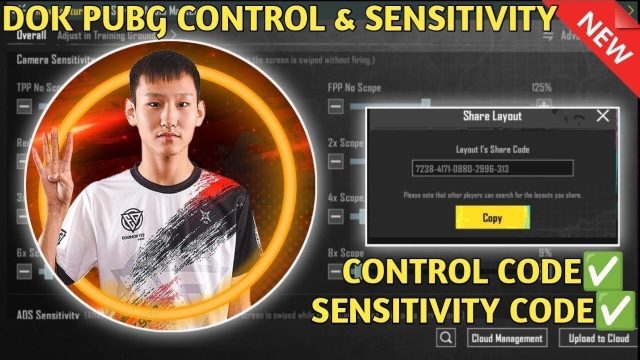
Gyroscope aim is the secret sauce for flick shots and recoil control—especially on high-end phones with precise motion sensors. Start with Bixco’s 1% gyro sensitivity: camera 1%, ADS (red dot, holo) 1%, 2x 1%, 3x 0.5%, 4x 0.5%, 6x 0.3%, 8x 0.1%. Why so low? On a 120Hz panel, tiny tilts become super responsive. If you prefer full gyro (always on), bump camera to 100% but keep ADS values low—otherwise you’ll spin out mid-gunfight. Adjust as needed: increase by 0.1% if you undershoot, decrease if overshoot.
Claw Layout Codes: Maximizing Your Touch Points

Two thumbs won’t cut it in high-tier lobbies. A classic 4-finger claw frees up your index fingers for crouch, jump, fire, and scope. Use this layout code as base: left index over the top-left corner for scope/peak; right index for fire and crouch; thumbs for movement and camera. Place your fire button slightly above the right edge so it doesn’t block vision. Button opacity: 20% when ADSing, 50% normally. If you run a 5- or 6-finger claw, shift scope to left index and add right middle finger for jump. The key is keeping buttons where your natural resting fingers land.
Sensitivity Codes for Different Weapon Classes

One sensitivity to rule them all is a myth. For high-end phones, set separate sensitivities per scope. Start with these values: general camera (third-person) 120%, red dot/holo 50%, 2x 45%, 3x 35%, 4x 30%, 6x 20%, 8x 12%. For ARs like M416 or SCAR-L, keep vertical multiplier at 1.0 but drop horizontal to 0.9 to control spray. DMRs like Mini-14 benefit from lower ADS sensitivity (40%) for precise taps. Snipers: 8x at 8% gives stable hold-breath aim. Test in training mode with moving targets—if your crosshair jumps a dot, reduce that scope’s value.
ADS Speed Optimization Codes

Aim Down Sight speed can make or break mid-range fights. On high-end phones with low touch latency, you want fast ADS without overshooting. Enable “Aim Acceleration” at 80% and set “ADS Sensitivity Multiplier” to 0.8. This gives a quick initial movement then slows for fine adjustments. For scopes, keep 3x and below at 0.85, 4x and above at 0.7. Pro tip: set your “Scope Mode” to “Hold” instead of “Toggle” for faster peeks. Combine with a high firing mode sensitivity (around 1.2) to stay agile while shooting.
Movement and Peek Controls for High-Framerate Gameplay

High-end phones pump out 90+ fps, so your movement needs to be silky. Use a “linear” joystick setting with slightly larger dead zone (15%) to avoid drift. “Peek & Fire” should be on independent buttons, not combined—left peek on the left edge, right peek on the right. Set “Hold to Lean” duration to 0.3s for quick jukes. If you’re on an iPhone with 3D Touch, enable “Force Touch” for the fire button to separate soft (scope) and hard (fire) presses. For Android, use the “Double Tap Scope” option to reduce accidental scope-ins.
Button Size and Position Codes for Prevention of Misclicks
Nothing ruins a top-3 situation like a misclick. Scale down your fire button to 80% of default—on 1440p displays it still feels responsive but leaves room for crouch. The scope button should be oval (horizontal stretch 1.2) and placed just above the fire button. “Weapon Switch” and “Grenade” buttons need a 10% opacity increase (40%) so you can see them fast. Disable all “Press to Crouch while ADS” to avoid accidental drops. Pro tip: leave a 10px gap between every button to prevent overlapping touches.
Auto-Pickup and Looting Settings for Speed
Loot speed = loot lead. Set “Auto Pickup” to only grab weapons and bullet attachments—disable helmets and vests to avoid cluttered inventory. Prioritize ARs over SMGs in auto-pickup list. Turn “Auto Equip Attachments” on, but set “Auto Swap Attachments” off so you don’t lose your suppressor. On a high-end phone, you can also reduce the “Pickup Delay” to 0.2s thanks to instant processing. This shaves off a second per crate, huge in hot drops.
Map and Mini-Map Magnification Codes
Spatial awareness on a big display means you need a mini-map that’s large but not blocking. Set mini-map size to 120% and position it 15px from the top-left edge. Enable “Zoom Mini-Map on Press” so tapping it shows a full-screen map for callouts. On the full map, increase marker transparency to 80% so you see terrain outlines. Pro players also enable “Sound Indicator” to see footstep direction—place those indicator arrows near the center of the screen for faster reaction.
Performance and Graphics Tweaks for Control Responsiveness
Control codes are useless if your game stutters. For high-end phones, set Graphics to “Smooth” and Frame Rate to “Extreme” (90 or 120 fps). Disable “Anti-Aliasing” (it adds input lag). Enable “Shadow” only if you need them for spotting enemies—they cost 2-3 fps. “Brightness” at 120% helps see dark corners. Turn “Bloom” off completely. For the control feel, enable “Fixed Frame Rate” in developer options if your phone supports it. This locks performance, eliminating micro-jitters during intense spray.
Remember: no code fits everyone. Copy these settings as a base, then jump into the training ground and tweak until every flick, recoil control, and movement feels instinctive. High-end hardware gives you the canvas—these codes are your brushes. Keep experimenting, and you’ll be dropping 20-bombs in no time.